

Table of Contents
- What Is Mushroom Coffee? A Beginner's Guide
- How Mushroom Coffee Is Made
- Mushroom Coffee vs. Regular Coffee: A Side-by-Side Comparison
- Common Functional Mushrooms Used in Coffee Blends
- Functional Mushroom Benefits: What the Research Suggests
- How to Choose Mushroom Coffee: A Buyer's Checklist
- Taste, Caffeine Content, and Potential Side Effects
- Conclusion: Is Mushroom Coffee Right for You?
- Frequently Asked Questions
Last Updated: October 3, 2026
What Is Mushroom Coffee? A Beginner's Guide
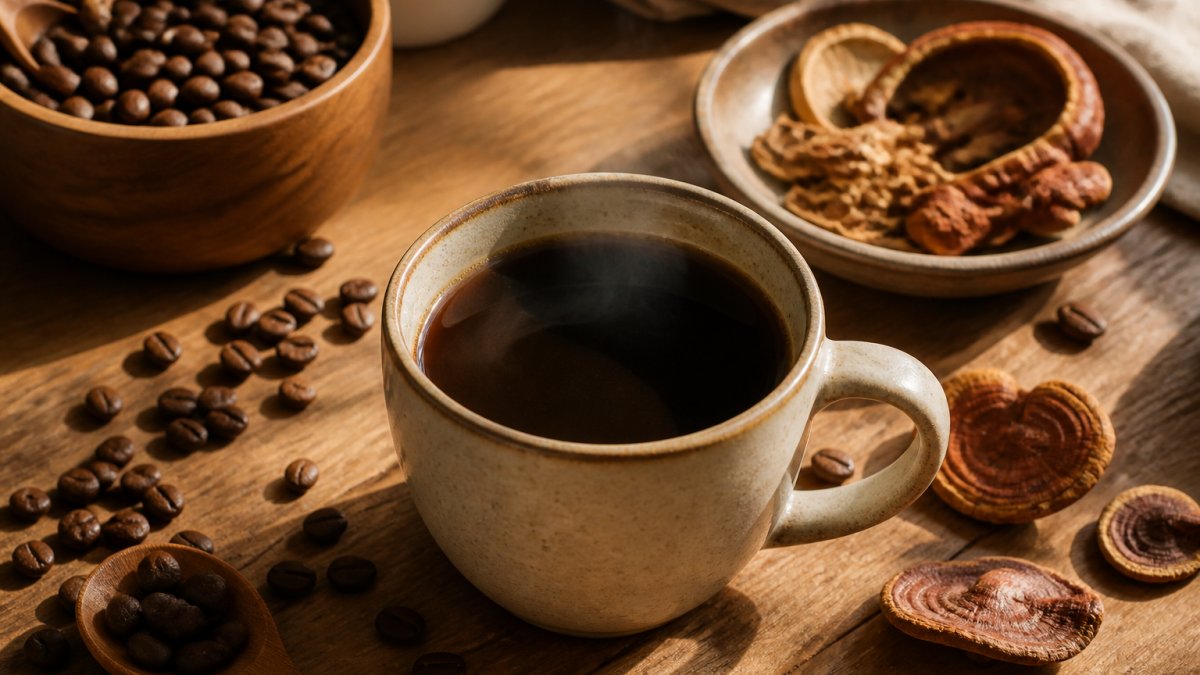
Mushroom coffee blends ground coffee beans with powdered extracts of functional mushrooms such as Lion's Mane, Reishi, Chaga, or Cordyceps.

The drink isn't new. East Asian wellness traditions have treated certain mushrooms as everyday tonics for decades.
Most people try mushroom coffee for one of two reasons: to cut back on caffeine without giving up the morning ritual, or to try mushrooms reputed to support focus and immune health. Both are reasonable starting points.
How Mushroom Coffee Is Made
Production starts with the mushroom, not the coffee. Growers cultivate the species, harvest the fruiting bodies, and dry them before extraction. The steps that follow determine almost everything about the final product.
Fruiting Body vs. Mycelium: The Sourcing Question That Matters Most
The fruiting body is the actual mushroom you'd recognize, the cap-and-stem structure above ground. Mycelium is the root-like network that colonizes a substrate, often grain. Both can be extracted, but they are not equivalent.
This is the single biggest quality differentiator in the category, and it is also the one most labels obscure. A brand that states "100% fruiting body" is telling you something specific.
Extraction: Heat, Solvent, and What Ends Up in the Powder
Mushrooms contain beta-glucans and other polysaccharides, the main compounds studied for immune and wellness effects. How the mushroom is extracted determines how much of them survive into the finished powder.
Hot-water extraction is traditional and pulls out water-soluble polysaccharides well; alcohol or dual extraction captures additional compounds. Some producers standardize their extract, testing the finished powder for a specific beta-glucan percentage, the closest thing the category has to a quality benchmark, and worth looking for on the label.
From Extract to Finished Product
After extraction, the material is either spray-dried into powder for instant blends or combined with ground coffee for a brewable product. Spray-drying is fast and cheap but uses heat, which can degrade heat-sensitive compounds; freeze-drying preserves more but costs more.
U.S. Food and Drug Administration guidance on dietary supplements outlines how supplement ingredients are regulated, which is worth understanding before trusting any label claim.
Instant Blends vs. Ground Coffee Infusions
Instant mushroom coffee dissolves in hot water in seconds, and the dose is consistent cup to cup because it's pre-measured.
Ground coffee infusions brew like standard coffee, but mushroom extract added to grounds may not fully extract in the same window, so some stays behind in the filter.
For anyone optimizing for mushroom intake rather than flavor, instant blends remove that variable.
Mushroom Coffee vs. Regular Coffee: A Side-by-Side Comparison
The two drinks differ most in caffeine load, taste, and how much mushroom you actually get per cup. The table below summarizes the practical differences.
| Feature | Mushroom Coffee | Regular Coffee |
|---|---|---|
| Caffeine content | Varies widely; some blends are near-zero, others approach full-strength coffee | Roughly 95 mg per 8 oz brewed cup, depending on bean and roast |
| Primary ingredient | Coffee plus mushroom extract (or mushroom extract alone in "coffee alternative" blends) | Coffee beans only |
| Taste profile | Earthy, sometimes woody or slightly bitter; Chaga and Reishi come through most | Roasted, bitter, acidic; varies by origin and roast |
| Preparation | Instant powder, brewable ground blend, or pods | Ground beans, any brew method |
| Mushroom dose per serving | Often undisclosed; can range from a token amount to a meaningful extract dose | None |
| Best for | Reducing caffeine without losing the ritual; adding functional mushrooms to a routine | Maximum alertness and familiar flavor |
Caffeine: The Number That Actually Matters
A standard 8-ounce cup of brewed coffee contains roughly 95 mg of caffeine, according to widely cited FDA figures. Mushroom coffee has no single number because the category isn't standardized: a mostly-coffee blend with a small extract addition can land near 95 mg, while a "coffee alternative" using roasted chicory, dandelion root, or cocoa can contain little to no caffeine.
The label is the only reliable source. If caffeine content is not disclosed per serving, assume it is comparable to regular coffee until proven otherwise, especially if coffee is the first ingredient.
Taste: What to Expect Before You Buy
Mushroom coffee doesn't usually taste strongly of mushrooms; the earthy notes blend into the coffee's bitterness. Chaga and Reishi come through more than the comparatively mild Lion's Mane. Instant blends are smoother; brewable ground blends taste closer to regular coffee with a savory undertone.

If you dislike the taste of regular coffee, mushroom coffee will not fix that. If you like coffee but want less caffeine, it can be a reasonable swap.
Brewing: Where the Two Diverge Most
Regular coffee extracts cleanly because the grounds are designed for it, but mushroom extract powder added to grounds doesn't always extract on the same timeline. In a drip machine or pour-over, some powder stays behind in the filter; a French press or stir-in method captures more, though it can leave sediment.
For anyone optimizing for mushroom intake rather than flavor, an instant blend removes that variable because the dose is pre-measured and fully dissolved.
Common Functional Mushrooms Used in Coffee Blends
Four species show up in most blends, each with a different traditional reputation.
Lion's Mane is the one most associated with focus and mental clarity. It's a white, shaggy mushroom, and it's the species most often paired with coffee for cognitive reasons. Reishi carries a reputation for calm and balance, which is why it appears in evening blends.
Organic Lion’s Mane Capsules for Focus & Clarity →
Turkey Tail and Maitake appear less often in coffee but are common in standalone mushroom supplements, usually for immune support.
Lion's Mane for Focus and Mental Clarity
Lion's Mane is the mushroom most people mean when they want mushroom coffee for brain fog. It contains compounds studied for effects on nerve growth, though human evidence remains preliminary and mostly small-scale.
That's an important distinction. Preliminary research is not the same as established evidence, and no mushroom is a substitute for sleep, nutrition, or medical care.
For anyone who wants Lion's Mane without the coffee, National Center for Complementary and Integrative Health overview of herbal supplements is a useful starting point for understanding what the evidence does and doesn't show. Shop Spora's Lion's Mane Cognition capsules use organic fruiting body extract with naturally occurring beta-glucans, which is a straightforward way to add it to a daily routine separately from your coffee.
Functional Mushroom Benefits: What the Research Suggests
Claims about functional mushroom benefits deserve careful reading: some rest on early research, others on marketing language.
Reasonably established: mushrooms contain beta-glucans and polysaccharides studied in relation to immune function.
What's not established at all: any claim that a mushroom supplement treats, cures, or prevents a disease. Supplements don't do that, and any product suggesting otherwise should be treated with suspicion.
A practical way to think about it: mushroom coffee is a beverage with potential mild benefits, not a treatment.
How to Choose Mushroom Coffee: A Buyer's Checklist
Choosing well comes down to reading the label and ignoring the front of the package.
- Does it list the mushroom species and amount per serving?
- Does it specify fruiting body rather than mycelium?
- Is there a beta-glucan percentage or a standardized extract figure?
- Does it state whether third-party testing is performed?
- Is the caffeine content disclosed per serving?
- Are there fillers, grain, or sweeteners listed before the mushroom?
- Is there a certificate of analysis available on request?
The single most useful item on that list is the beta-glucan figure.
Sourcing transparency is the other signal worth watching. Brands that name their growers, publish test results, or explain their extraction method are generally easier to trust than ones that only use the word "premium."
Taste, Caffeine Content, and Potential Side Effects
Taste varies more than most buyers expect: instant blends are smoother and slightly earthy, while ground infusions taste closer to regular coffee with a savory undertone.
Caffeine content is the number to check first. Some blends are full coffee replacements with a comparable caffeine load; others are lighter options. Neither is better, but they suit different goals.
Side effects are generally mild and relate to the caffeine more than the mushrooms.
Less common but worth knowing: some people report digestive discomfort from certain mushroom extracts, particularly Chaga.
Conclusion: Is Mushroom Coffee Right for You?
Mushroom coffee suits people who want the ritual of a warm cup with less caffeine and are curious about functional mushrooms but don't want capsules. It suits them less if they want maximum alertness or a guaranteed therapeutic dose of anything.
If you're drawn to the mushroom side more than the coffee side, a dedicated supplement removes the guesswork. Shop Spora makes organic, lab-tested mushroom supplements using only the fruiting body, with no grain fillers, including Lion's Mane Cognition capsules for focus and mental clarity and a Lion's Mane and Ashwagandha bundle for a simple two-part daily routine.
Frequently Asked Questions
Does mushroom coffee contain caffeine?
Most mushroom coffee blends do contain caffeine because they mix mushroom extract powder with regular coffee. The amount varies by brand, but many blends use less coffee per serving than a standard cup, so the caffeine content is often lower than traditional coffee. Some products are made with decaffeinated coffee or mushroom extract alone, which means they contain little to no caffeine. Check the label for the exact caffeine content per serving if you are sensitive to caffeine or trying to limit your intake.
Does mushroom coffee taste like mushrooms?
Most people find that mushroom coffee tastes like regular coffee with a slightly earthy or smooth finish. The roasting and brewing process, along with the coffee beans themselves, usually mask the flavor of the mushroom extract. Some blends have a more noticeable earthy flavor than others, depending on the type of mushroom and how much extract is used. If you are new to mushroom coffee, starting with a blend that has a higher ratio of coffee to mushroom extract can make the transition easier.
Can you drink mushroom coffee every day?
Many people drink mushroom coffee daily as part of their morning routine. The functional mushrooms commonly used, such as Lion's Mane, Reishi, Cordyceps, and Chaga, are generally considered safe for regular consumption in food amounts. However, if you take prescription medications, have a medical condition, or are pregnant or nursing, talk to your healthcare provider before making it a daily habit. Some mushrooms can interact with blood thinners, immunosuppressants, and other drugs, so a quick check with your doctor is a sensible step.
What are the benefits of mushroom coffee vs regular coffee?
Mushroom coffee offers a different experience than regular coffee. It typically has less caffeine, which may mean fewer jitters and a gentler crash for some people. The added mushroom extracts bring compounds like beta-glucans and antioxidants that are not present in regular coffee. Preliminary research suggests functional mushrooms may support immune function, cognitive health, and stress balance, but these findings are early and not conclusive. Regular coffee, on the other hand, delivers a higher, more predictable caffeine dose and has been studied extensively for alertness and performance.
Choosing a mushroom coffee is really an exercise in reading labels carefully, because the category rewards transparency and punishes assumptions. Shop Spora builds its supplements around organic fruiting body extracts, lab testing for purity, and formulas without grain fillers, so what's on the label is what's in the capsule. Browse the full range and start with a routine you can actually keep.


